What Is NGO Full Form? Understanding What Is NGO and Its Functions
Introduction to What Is NGO Full Form
Many people often ask, “What is the full form of NGO?” NGOs are a vital element of social development, community welfare, environment protection, education, healthcare, and poverty alleviation. Such organizations work independently of government control and their main goal is to have a positive impact on society.
Knowing the full form of NGO, what is an NGO and what an NGO does, one can understand the ways in which these organizations help in making the world a better place. This article highlights the definition of NGOs, their aims, roles, functions, advantages, and significance in community.
What Is NGO Full Form?
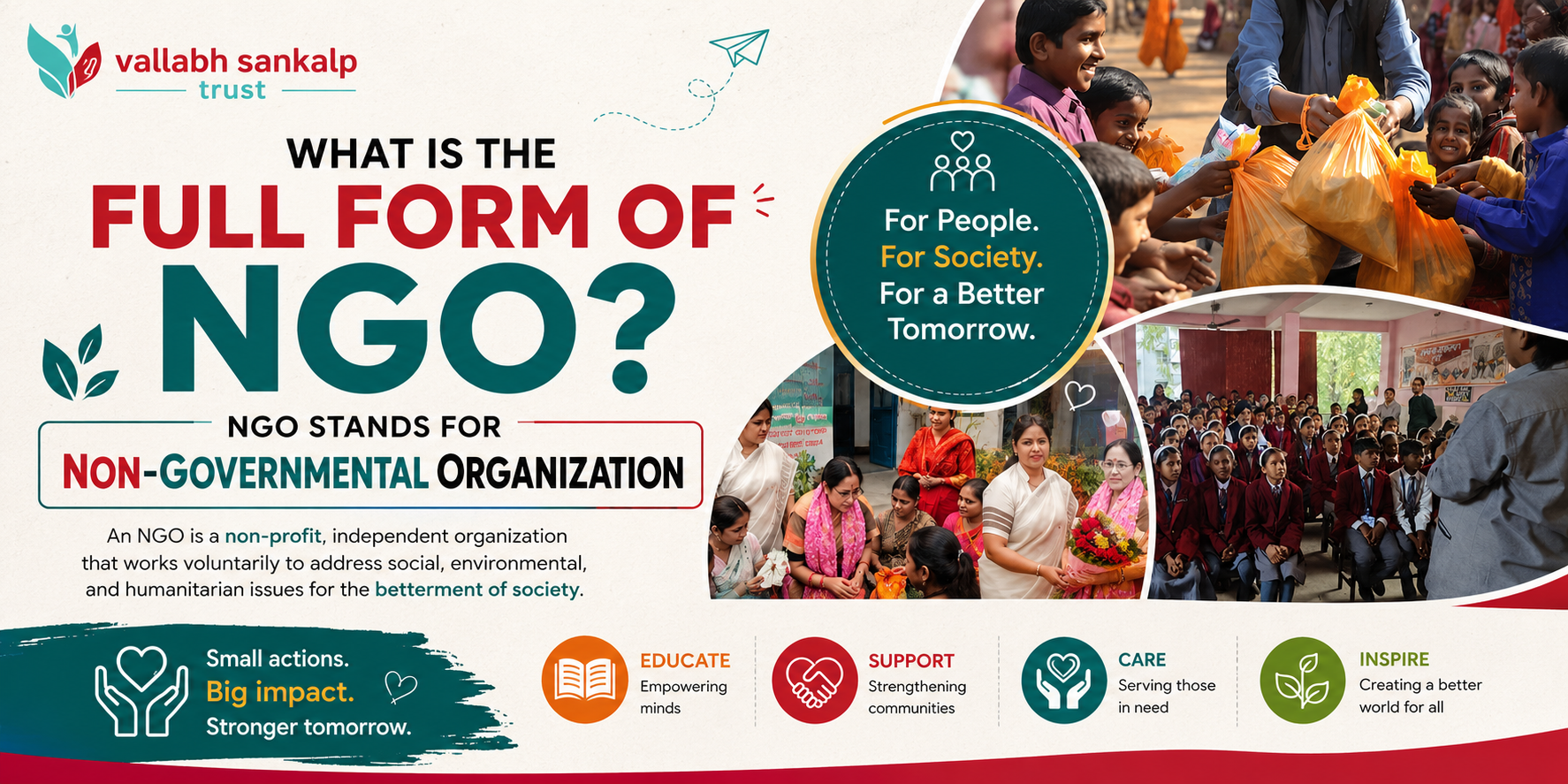
NGO stands for Non-Governmental Organization.
NGO implies a nonprofit organization which stands free from government institutions. Such organizations are created by people, groups, or communities to deal with social, environmental, educational, cultural, and humanitarian issues.
Through the implementation of services, support, advocacy campaigns, and development programs NGOs aim at transforming people’s lives. Typically, NGOs are only able to supply these services with the help of donors, grants, volunteers, and fundraising activities.
What Is NGO?
Discussing what is NGO, the most straightforward explanation would be: an NGO is a non-profit entity established specifically to serve public interests without pursuing profit.
NGOs aim at addressing the following social issues:
- Poverty
- Hunger
- Education gaps
- Healthcare accessibility
- Women’s empowerment
- Child welfare
- Environmental conservation
- Disaster relief
- Human rights protection
Such organizations also act as intermediaries between communities, donors, and government agencies so that they can work toward implementing effective changes in society.
What Is NGO and Its Functions?
Another very popular question is what is an NGO and its functions. By carrying out a wide array of activities, NGOs aim at the betterment of social welfare and the development of the community.
1. Social Welfare and Community Development
NGOs play an important role in empowering vulnerable and marginalized communities, among others through the provision of:
- Food supplies
- Accommodation
- Health-related services
- Educational facilities
- Training for employment
Their objective is to enhance the quality of life and establish self-reliant communities.
Example
For instance, NGO’s set up health camps without charging any fee, hand out food to needy families, and also back rural development works.
2. Education and Skill Development
Education is among the key focuses of NGOs.
They help by:
- Scholarship schemes
- Literacy drives
- Online education programs
- Vocational training schools
- Career planning seminars
In this way, NGOs that encourage education normally help the people they serve to become independent and develop themselves.
3. Healthcare Support
NGOs working in the medical field offer help to people who are at risk.
Some of the things they do are:
- Organizing free medical camps
- Running vaccination programs
- Conducting health information sessions
- Providing maternal and infant health care
- Leading campaigns on the prevention of diseases
Such initiatives result in a healthier society and a fairer distribution of health care.
4. Environmental Protection
Nonprofit groups interested in the environment are focused on building a green planet.
Their efforts include:
- Conducting tree plantation campaigns
- Protecting endangered species
- Implementing water saving methods
- Educating about waste disposal
- Lobbying for climate change mitigation
This type of work secures the earth’s precious resources for the generations yet to come.
5. Women’s Empowerment
Some NGOs consider women empowerment as the main theme of their work and do it by linking it with education, job opportunities and awareness raising programs.
Women’s empowerment functions encompass:
- Training for skill enhancement
- Offering support for small businesses
- Raising legal consciousness
- Forming self-help groups (SHGs)
- Financial education programs
Empowering women is undoubtedly a major factor in the progress of society as a whole.
6. Child Welfare Programs
Child welfare NGOs are engaged in various activities related to safeguarding and caring for children.
They offer:
- Supporting education
- Providing micronutrient-rich meals
- Protection from abuse
- Foster care for orphans
- Campaigning for child rights
With the help of these agencies, children are given a fair chance at life.
Importance of NGOs in Society
It is through their very presence and work that NGOs attest to their importance in the society.
Filling Social Gaps
The most vulnerable and underserved population, who are the first to be neglected in the absence of government support, are most often the ones where NGOs end up helping.
Promoting Equality
These organizations are engaged in various activities with a mission to bring down the levels of social inequality and offer different chances to the groups of society which have been marginalized.
Encouraging Community Participation
By carrying out their missions, NGOs not only serve the communities but they also can inspire and encourage the members of the local communities to take the initiative and get involved in the development of their areas and the welfare of their people.
Supporting Sustainable Development
By running diverse projects in the fields of environment, education, and health, NGOs are helping to achieve sustainable development globally.
Types of NGOs
NGOs usually operate in different sectors depending on their mission and goals.
Charitable NGOs
These organizations mainly give aid by:
- Distributing food
- Giving medical help
- Running shelter programs
- Providing disaster relief
Educational NGOs
Their main focus is on:
- Raising literacy
- Developing schools
- Providing scholarships
- Training skills
Environmental NGOs
Such organizations generally conduct:
- Conservation activities
- Pollution control measures
- Environmental education campaigns
Human Rights NGOs
Among the issues they fight for are:
- Social justice
- Equality
- Protection of human rights
Healthcare NGOs
They work towards:
- Widening knowledge on public health
- Setting up medical camps
- Making healthcare services more reachable
Objectives of NGOs
There are several key aims of NGOs, some of which are:
Improving Quality of Life
The goal is to assist people in acquiring necessary resources and services.
Empowering Communities
This involves motivating people to be self-sufficient and to focus on long-term development.
Addressing Social Issues
One of the ways NGOs address problems is by targeting issues like poverty, illiteracy, and unemployment.
Protecting Human Rights
One of the criteria for human rights is that every person should be treated fairly and equally at all times.
Environmental Sustainability
Include advocating for green habits and support the conservation of nature.
How NGOs Are Funded
Because NGOs are not profit-making organizations, they depend on various means of raising funds.
Donations
Many people through personal giving contribute funds towards the support of societal issues.
Corporate Social Responsibility (CSR)
Commercial enterprises provide monetary support as part of their CSR ventures.
Government Grants
A few NGOs are granted funds by the government to run approved welfare schemes.
International Funding
At times, international groups and charitable organizations issue funds for the implementation of development projects.
Fundraising Events
NGOs create advocacy and fundraising campaigns and hold monetary support raising events.
Benefits of NGOs
The benefits are yet another reason to get a better understanding of what is NGO and its functions.
Social Development
NGOs through their social initiatives introduce changes for the better in society.
Economic Empowerment
The provision of skills leading to securing of livelihoods is one of the ways they contribute.
Better Education
Programs on education are the steps towards increasing literacy and providing educational opportunities.
Improved Healthcare
Community health and prosperity come through awareness and provision of medical services.
Environmental Awareness
Helping communities understand the importance of conservation and adopting lifestyles that do not harm nature.
Challenges Faced by NGOs
NGOs in spite of giving so much, have to manage with:
Limited Funding
Money is at times a big factor for a delay in the work.
Lack of Resources
Generally, NGOs have little staff and modest infrastructures.
Regulatory Compliance
Besides the program, the authorities also keep pressures of fulfilling paperwork continuously.
Public Awareness
Some NGOs find it difficult to rise above the noise and engage with the community.
Nevertheless, NGOs keeps on changing the world for a better place by their work.
The Future of NGOs
There is hope for NGOs since social consciousness is increasing.
Below is a list of the different upcoming trends:
- Digital fundraising
- Online education programs
- Technology-driven social initiatives
- Environmental sustainability projects
- Community-based development models
Today NGOs using technology to not only spread awareness but also create more impact.
Conclusion
Knowing the full form of NGO can help us understand what an NGO is and what it does, thereby enabling us to be more appreciative of the significant roles they play in the society. NGO full form means Non Governmental Organization and these organizations work to make people’s life better in different ways like education, health, environment, women empowerment, children’s welfare and community development.
NGOs are a strong force for social change that stands for those who are most at need. By giving time, resources, or money, people can support NGOs to carry out their work of fostering a more inclusive, sustainable, and caring world.
FAQs About What Is NGO Full Form
1. What is NGO full form?
The full form of NGO is Non-Governmental Organization.
2. What is NGO?
NGO is a private organization run by individuals that operate independently of government intervention, usually addressing humanitarian, environmental and social causes.
3. What is NGO and its functions?
NGO are performing roles in the areas of education, health, environmental protection, social welfare & community development.
4. Are NGOs government organizations?
No, NGOs are not affiliated with government or controlled by government.
5. What is the main purpose of an NGO?
The ultimate goal is to bring about improvement and progress in public welfare and society.
6. How do NGOs get funded?
Besides receiving donations, they are also funded by grants, CSR funds, and by organizing fundraising events.
7. Do NGOs make profits?
The main aim of NGOs is to help society, making profit is not their concern.
8. In which areas do NGOs operate?
Concerned with sectors like education, health, environment, child welfare, women’s empowerment, and human rights.
9. What makes NGOs necessary?
They work towards multiple social problems and together with the support of the local community help in the development of society.
10. Is anyone allowed to start an NGO?
As long as they obtain the proper registration and comply with the laws of their country, then anybody can start an NGO.